

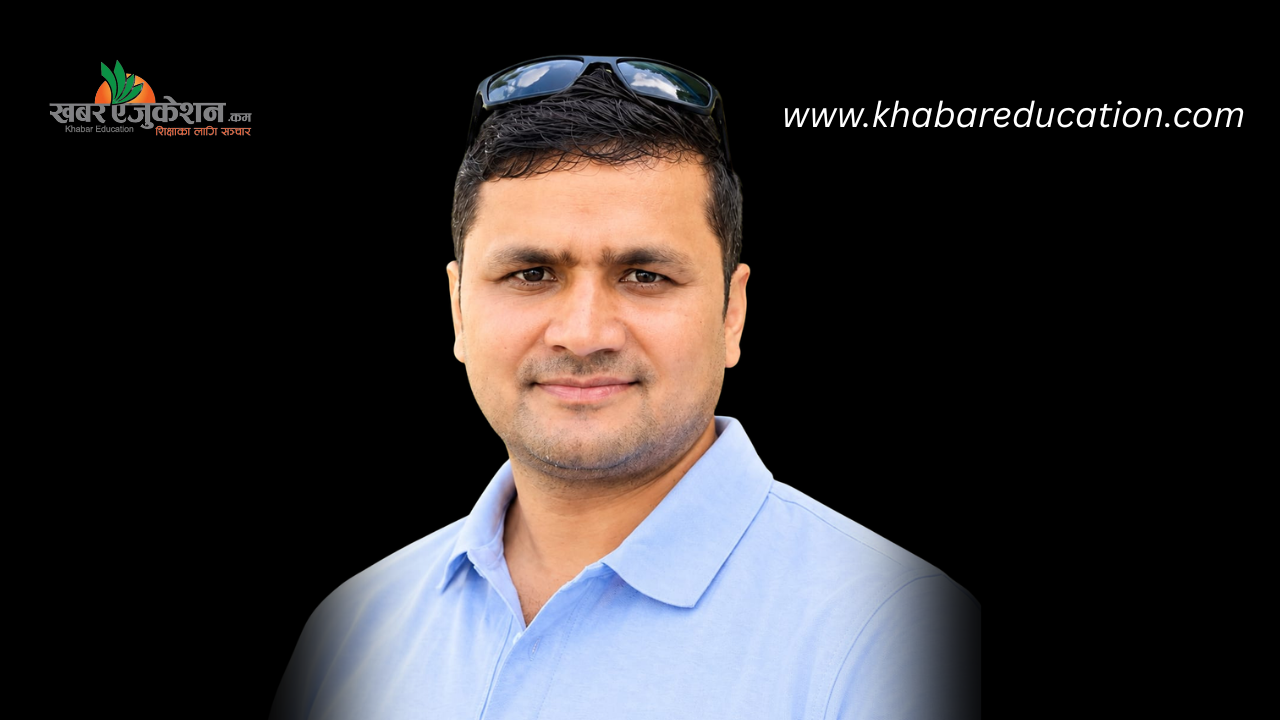
Kathmandu, 28 September – Being the issue coordinator/editor of the September 2026 issue of NELTA ELT Forum has been a significant learning experience from an academic and professional point of view, as well as a personal one. At the time I took over, I knew little about the role beyond coordinating manuscripts, interacting with authors and reviewers, keeping track of the editorial process, and assisting with the issue’s publication. But as the editorial journey continued, I realised that organising a professional publication involves more than just dealing with manuscripts. A shared academic responsibility which must be handled with good judgment, proper communication, patience, ethical awareness, and a sense of the purpose of the publication. Reflecting on the experience now, I see it as more than just an “editorial” thing; it’s an opportunity to think about what it means to be an academic professional, to learn professionally, to work collaboratively, and to build a community.
September 2026 is itself an expression of the overall mission of NELTA ELT Forum. The editorial introduces the Forum as a forum for discussion amongst professionals and as a tool to consolidate a Community of Practice in NELTA. This issue focuses on a variety of professional and scholarly articles, such as an interview, a reflective or practical article, a thematic review and a critical book review. The articles cover a variety of topics related to the teaching of the English language, such as reflective practice, learner agency, professional learning, pedagogical contexts, collaboration, indigenous knowledge, multilingualism, and the responsible use of technology in the teaching of the English language.
These contributions underscored the variety of ways in which a professional forum can be used to appreciate a text and helped me to appreciate that such a forum is not just for publishing academic texts. It also can provide a platform for teachers, teacher educators, researchers and other ELT professionals to exchange experience, challenge the status quo, and learn from each other.
Understanding the Responsibility of Coordination
A first big wake-up call for me was how much responsibility is involved in the role of the Issue Coordinator. A coordinator connects different groups of authors, reviewers, editors and other professionals. The expectations are different for each group. The author expects his/her work to be treated with respect and fairness. Reviewers expect that adequate time and clear communication are provided. The editors expect the issue to be academically and editorially appropriate. Readers, however, look for the published issue to be relevant, coherent and useful.
This was an eye-opener for me that coordination is not only administrative work. It’s an academic activity that entails ongoing decision-making. All manuscripts must be considered in terms of relevance, quality, coherence, originality, presentation, scope and the guidelines of the publication. Meanwhile, editorial decisions must be shared carefully, since there’s an author behind every manuscript who’s invested time, effort, experience and professional aspirations.
This responsibility came to the fore during the editorial decision process for this issue. We received a total of 16 submissions. After editorial, 7 contributions were published in the September 2026 issue, 8 were invited to be revised and considered for the next issue, and 1 contribution was not accepted due to not meeting the guidelines for the Forum. These decisions were not numerical results. They were symbolic of a process of reading, review, consultation, discussion and consideration of the editorial purpose and standards of the Forum.
Learning to Balance Quality and Inclusiveness
The most crucial thing I learned during this period is that there has to be a balance between academic excellence and inclusiveness. A professional forum should have standards, but also provide opportunities for professional learning and participation. Sometimes these two uses seem to be in conflict.
There were several criteria that needed to be addressed in the process of editing, such as originality, length, reviewers’ comments, and ensuring that the manuscript meets submission guidelines and that it is clear and focused. The general revision criteria also noted a manuscript plagiarism score of less than 20% and an AI-writing score less than 20%, a length of no more than 3,000 words, and a systematic response to reviewers’ comments. Importantly, the invitation to revise was a decision that was not acceptance of the manuscript.
This experience showed me that the requirements are not just limitations to editorial standards. They can be used to enhance academic writing and to better support contributions. Requesting a revision can help an author rethink the organisation of an argument, clarify the goal of a paper, enhance evidence, resolve reviewer comments, or improve a paper’s readability for its intended audience.
Meanwhile, I found out that there is a lot of importance in editorial communication. A decision could be based in academia, but when it comes across without sensitivity, the author could simply see it as rejection. So, I saw developmental editing as a key part of the editor’s job. If revision was possible, the aim was not just to point out flaws, but to make the authors aware of how their manuscripts can be improved.
The Importance of Collaboration
A key takeaway from the issue coordination was the critical role of collaboration. It takes a team of people to develop a successful issue in a professional forum. The September 2026 issue is the result of a collective effort of the Editor-in-Chief, Deputy Editor-in-Chief, issue editors, reviewers, authors, and the rest of the editorial and support staff. The issue itself recognises these collective efforts.
I’ve observed this in practice, and it’s definitely a relational publishing model. A coordinator needs to be able to talk to various individuals, answer questions, follow up on unfinished things, define goals and expectations, and possibly even be a go-between for different perspectives. This, of course, requires organisation as well as interpersonal sensitivity.
I found myself very appreciative of reviewers, in particular. A reader seldom sees reviewing, but it is essential to the quality of a publication. Both reviewers and authors have an obligation to exchange information and ideas without charges and with the understanding that reviewing and decision-making are based on their knowledge and experience. As a coordinator, I have found that clarity, respect and appreciation are the key components to engaging reviewers. Their comments do not just serve to accept and reject manuscripts, but can also be helpful to authors’ professional growth.
Experiencing the Difficulty of Editorial Decisions
Making and communicating tough decisions were the hardest aspects of the process. Selection is required if the number of contributions exceeds the number that can be accommodated. Similarly, manuscripts may have to be significantly revised before they can be accepted for publication. Some articles in this issue needed extensive revisions; others did not adequately respond to the reviewers or did not meet the Forum’s submission requirements. There are some such cases recorded in the editorial decision, such as manuscripts that needed a high level of revision, and manuscripts that needed to be revised based on reviewers’ feedback and submission requirements. One article review was rejected as it did not meet the Forum guidelines.
These experiences left me with an understanding that editorial decisions are made based on a set of clear criteria and not personal tastes. This is certainly true in the case of consistency, fairness and transparency. The coordinator should not be influenced by authors’ identity, institution or familiarity in treating manuscripts differently. These decisions should rather be linked to the quality, relevance, genre of the manuscript and its fulfilment of expectations.
This experience has reinforced my knowledge of integrity in academic work. The editorial responsibilities are shared with the publication and with the authors and the wider professional community. The credibility of a professional forum relies heavily on how contributors view the editorial process as being fair and academically responsible.
Editorial Work as Professional Development
The biggest personal learning was that coordinating the issue itself was a professional learning experience for me. Professional development is typically seen as being experienced through workshops, conferences, training sessions, or formal courses. My experience at the editors’ desk brought to mind that professional learning can happen in a meaningful way by being a member of an academic community.
This work helped me become more aware of academic writing, the structure of a manuscript, peer review, editorial standards, communication and publication processes. I also had the chance to read a variety of views on ELT and discuss issues that are pertinent to teachers and teacher educators.
This was especially significant in the interview that was included in the issue. The questions that are asked in the interview with Dr Madhu Neupane Bastola are about supervision, academic writing, feedback, student engagement, researcher development, multilingualism, artificial intelligence, research culture and professional development. I gained the sense that professional knowledge was not only created through formal research, but also through dialogue and shared experience, as I carried out and coordinated such a contribution.
The whole issue also illustrates the benefits of professional learning through reflection and exchange. Its contributions as a whole highlight the importance of continuous learning, reflection, adaptation, collaboration, context sensitivity, student voice, indigenous knowledge, and professional learning.
Reflection on My Own Professional Growth
In retrospect, I can identify a few things I have learned in this experience. First, I have thought more about the connection between editorial decisions and academic ethics. Prior to this position, I knew quality in the editorial sense only in relation to the quality of the publication itself. Now I realise it is the quality of the process as well.
Secondly, I am more patient. The editorial process doesn’t always work out as planned. There can be unexpected problems that come up, multiple rounds of revisions are needed, reviewers may have competing interests, and authors might need more time. I learned how to work effectively and coordinate while being flexible, but not losing track of deadlines and standards.
Thirdly, I’ve enhanced my communication abilities. I learned that the editor must communicate clearly and respectfully, especially when giving critical feedback. It’s a lesson I learned that any communication at work needs to be clear in its message without being too intrusive or overbearing.
Fourth, I have been more aware of the need for context. All authors do not necessarily have the same background in academic writing or publication. Some contributors may have mastered research skills and are ready to contribute as experienced researchers; others may be developing their voice as a scholar. A professional forum can then become an outlet for publishing but also for professional development and mentoring.
From Publication to Community Building
Another, and an important reflection, relates to the wider mission of the Forum. When a problem is considered only to be a collection of articles published, the editorial process can be too manuscript-centred, to set on deadlines and too concerned about formatting. But when it came to thinking outside the box, I was reminded of that by the September 2026 edition.
The Forum’s role is explained in its statement on professional dialogue and Community of Practice. A professional community is meaningful when community members have opportunities to share experiences, see other viewpoints, consider their practices, and build new understandings.
In this context, it is more than just the last texts present in its pages. It reflects the discussion that took place before publication, the dialogue between reviewers and authors, editorial considerations in making decisions, and the professional connections developed in the process.
This has shaken the way I think about the job of an issue coordinator. The coordinator does not just mean someone who sees to the completion of an issue. The coordinator also contributes to establishing the space and conditions for the sharing and development of professional knowledge.
Challenges and Lessons for Future Issues
It was very rewarding but not without challenges. Having multiple contributors to coordinate takes careful time management. Keeping track of revisions and editorial needs, along with communicating with authors and reviewers, can be challenging. It is also necessary to maintain consistency across the various manuscripts, and this needs to be monitored over time.
These challenges have been helpful learning experiences for future challenges. I think that the editorial process can be made more efficient by communicating submission requirements earlier, providing clearer timelines, making a better system for tracking revisions, and better communication with the reviewers/author. It might also be helpful to offer authors better direction on what is expected from the various types of articles, especially when the Forum consists of research-based, reflective, practical, review, and interview-oriented pieces.
A second lesson is that of the importance of identifying the manuscripts that need a significant amount of revision early. Positive and timely feedback can give authors an idea of expectations in the final stages of editing. This can cut down on needless delays and subsequently improve the overall quality of future issues.
Conclusion
Overall, it has been a very reflective and enriching experience to serve as the Issue Coordinator/Editor for the September 2026 issue of NELTA ELT Forum. It has enabled me to gain insight into academic publishing as a process of collaboration based on responsibility, dialogue, fairness, and perpetual learning.
The experience has shown me that it is not the coordinator who creates a successful publication. It is a product of all authors, reviewers, editors and the entire profession. Each of the sixteen contributions that were considered during the process, each of the editorial decisions made, each of the revisions requested, and the final collection of diverse contributions were all pieces of the academic journey that each one of them shared.
Most importantly, the experience has further strengthened my conviction that professional learning is not restricted to formal learning. It can happen in a collaborative way, with reflection, through academic discussion, reviewing, writing, editing and engaging in professional communities. From this point of view, it was a learning process for me to coordinate the Forum, as well as an editorial one.
I would like to thank all the authors for entrusting their work to the Forum, all the reviewers for their time and knowledge, and the editorial and support staff for their collaboration to make this issue possible. This experience has further enhanced my understanding and respect for NELTA as a professional association and has motivated me to see the editorial process as a means to make my contribution to the ongoing development of English language teaching and learning in Nepal.
Finally, I think that a problem is meaningful if it gives people the opportunity to read, think, ask questions, share and learn. It has been a journey of that nature for the September 2026 issue, and coordinating that journey has been an important aspect of my own journey as an ELT professional, teacher educator, researcher and community member.
(Dammar Singh Saud Coordinator/Editor, NELTA ELT Forum)